
In this article
When haze hits Malaysia, most people worry about coughing, sore throats and breathing difficulties.
But did you know that haze can also affect your skin?
Air pollution does not only affect your lungs. Your skin is constantly exposed to environmental pollutants, including fine particulate matter that may contribute to inflammation and skin barrier disruption.
For people with existing skin conditions, haze may make symptoms worse.
Haze exposure may contribute to:
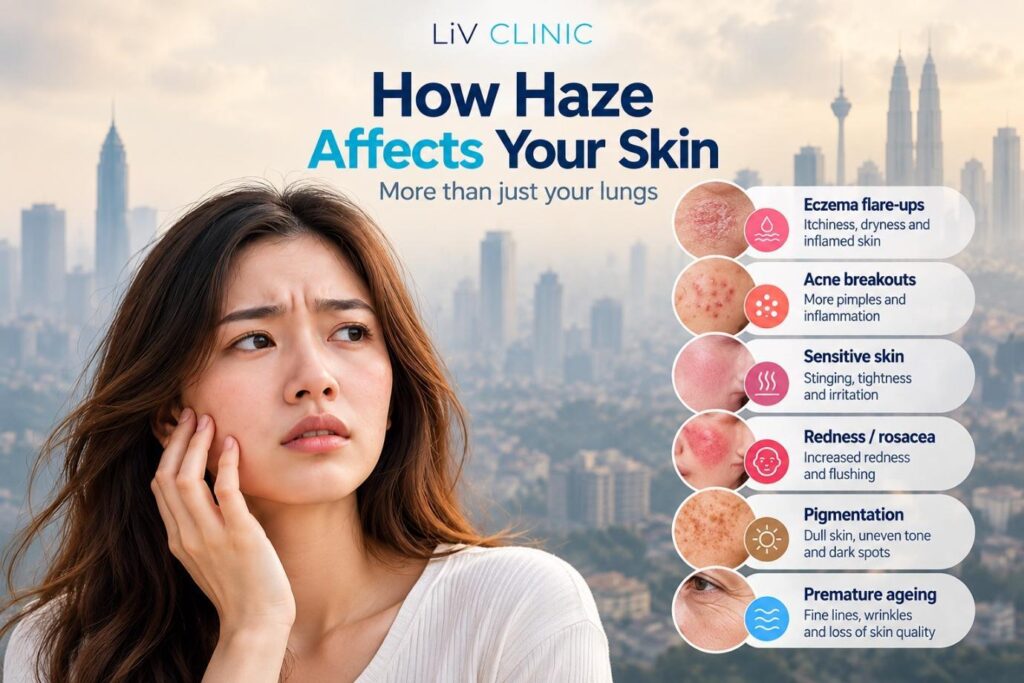
If your skin suddenly becomes itchy, red or uncomfortable during haze season in Kuala Lumpur, air pollution may be one of the contributing factors.
Research increasingly links air pollution with several inflammatory skin conditions, although the strength of evidence differs between diseases.
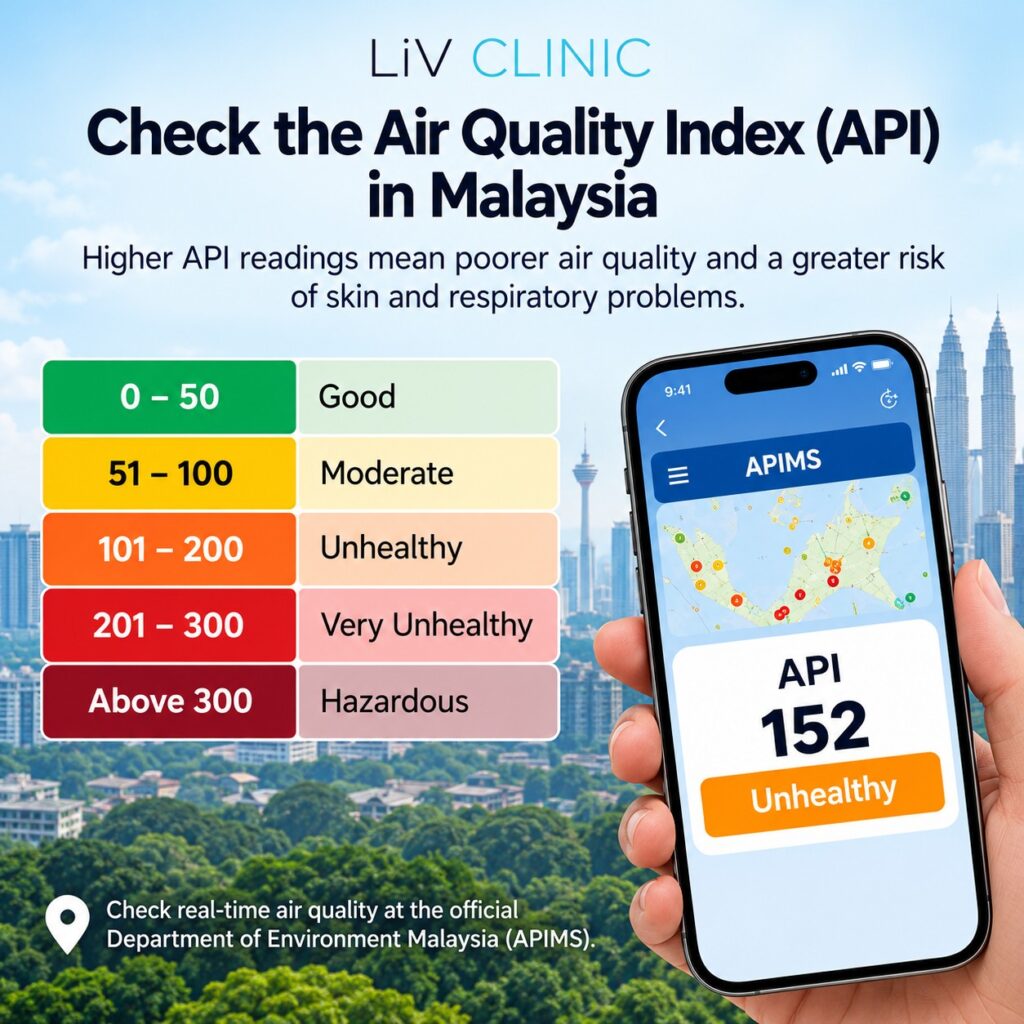
Haze, also known as jerebu in Malaysia, occurs when airborne particles and pollutants reduce visibility and affect air quality.
These pollutants may originate from forest fires, biomass burning, vehicle emissions and industrial activities.
Two important types of particulate matter are:
PM2.5 — Fine Particulate Matter
These particles measure 2.5 micrometres or smaller.
They can remain suspended in the air and contribute to oxidative stress and inflammation. Fine particles and their associated chemicals can also interact with the skin’s surface.
PM10 — Coarse Particulate Matter
These particles measure 10 micrometres or smaller.
They may settle on exposed skin and contribute to irritation, particularly in individuals with compromised skin barriers.
Your skin has a natural protective barrier that helps retain moisture and protect against environmental irritants.
Air pollutants may affect this barrier through several mechanisms.
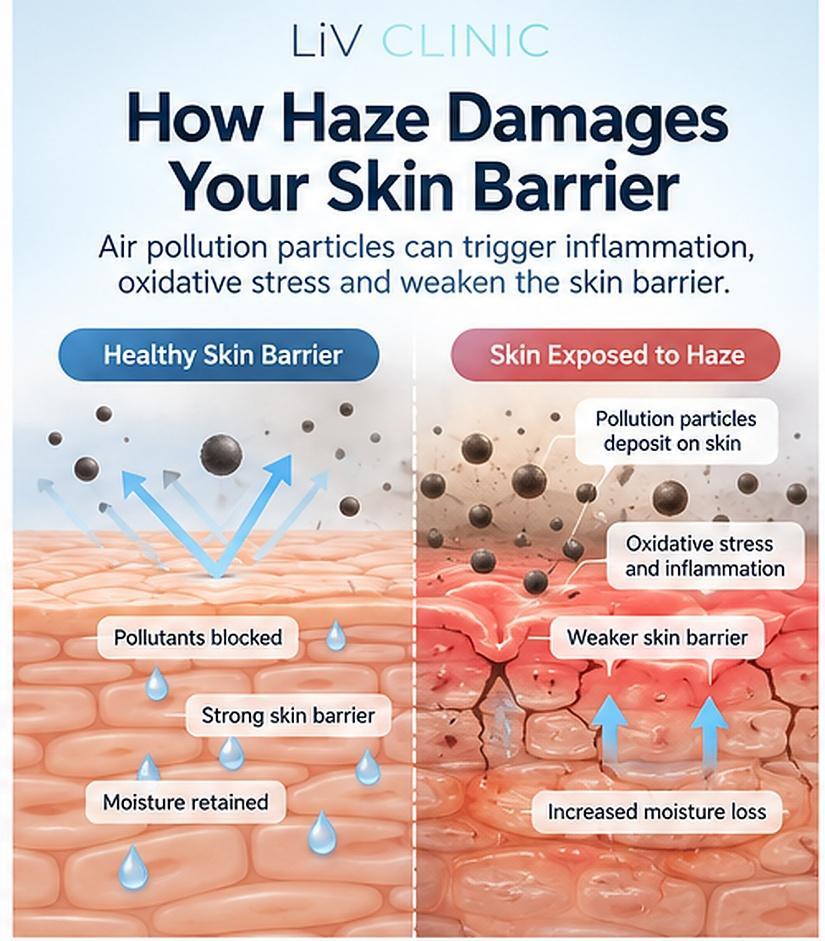
Certain pollutants can promote the formation of reactive oxygen species (ROS), which may damage cellular components and contribute to inflammation.
Pollution can interfere with normal barrier function, potentially increasing moisture loss and skin sensitivity.
Exposure to pollutants may activate inflammatory pathways, making existing conditions such as eczema more difficult to control.
Air pollution may influence the balance of microorganisms living on the skin, although the clinical significance is still being studied.
These mechanisms help explain why some people experience worsening skin symptoms during periods of poor air quality.
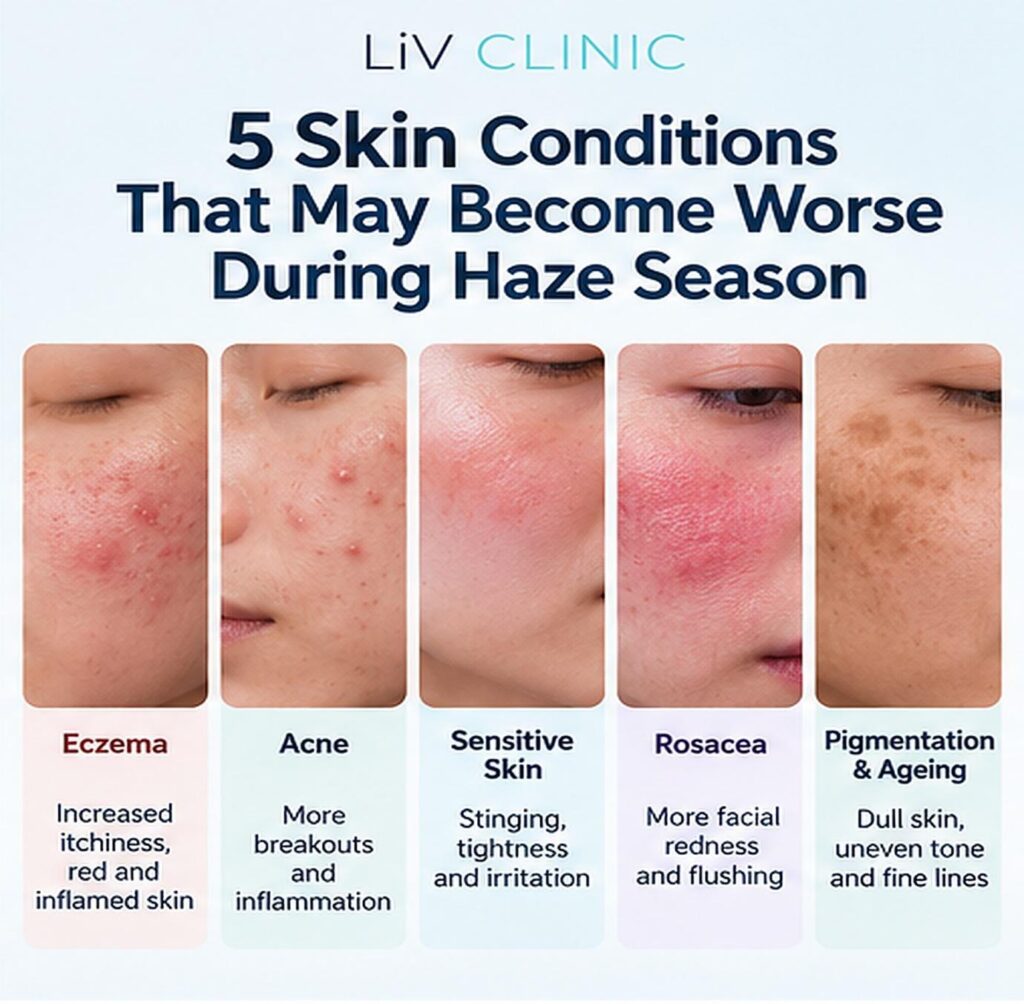
Eczema is one of the skin conditions most consistently associated with air pollution exposure.
People with eczema, also called atopic dermatitis, already have a weakened skin barrier and an increased tendency towards inflammation.
During haze season, environmental pollutants may aggravate existing eczema.
Common symptoms include:
If you have eczema, focus on strengthening your skin barrier.
Choose a gentle, fragrance-free cleanser and moisturise regularly with a cream containing ingredients such as ceramides, glycerin or petrolatum.
Avoid hot showers, harsh scrubs and excessive cleansing.
If your eczema becomes inflamed, moisturisers alone may not be sufficient.
Prescription anti-inflammatory treatment may be necessary.
Doctor’s Tip: During haze season, eczema-prone skin usually benefits more from consistent barrier repair than from adding multiple new skincare products.
Have you noticed more pimples appearing when the air quality becomes poor?
Air pollution may be one of the contributing factors.However, haze should not be considered a direct or sole cause of acne.
Acne is a complex inflammatory condition involving excess sebum, follicular blockage, Cutibacterium acnes and inflammation.
Environmental pollutants may aggravate some of these processes.
Maintain a simple skincare routine.
Use a gentle cleanser twice daily, apply a lightweight non-comedogenic moisturiser, and continue suitable prescribed acne treatments.
If your skin becomes unusually dry or irritated, your doctor may recommend adjusting the frequency of certain active ingredients.
Avoid aggressively scrubbing your skin to remove pollution particles, as this can worsen irritation.
Does your face suddenly feel itchy, tight or uncomfortable during haze season?
This may be related to skin barrier irritation.
People with sensitive skin can experience discomfort when exposed to environmental changes, including pollution, heat, humidity and irritating skincare ingredients.
Common symptoms include:
When your skin becomes irritated, the priority is to reduce unnecessary irritation.
Temporarily simplify your skincare routine.
Consider reducing strong exfoliating acids, aggressive scrubs and other potentially irritating products until your skin settles.
Instead, focus on three essentials:
Gentle cleansing + Moisturising + Sun protection
If irritation persists despite simplifying your routine, a skin assessment may be needed to distinguish sensitive skin from eczema, rosacea or contact dermatitis.
Rosacea is a chronic inflammatory skin condition that commonly causes facial redness, flushing and sensitivity.
Environmental factors such as heat, sunlight and certain irritants can trigger symptoms.
Air pollution may contribute to skin inflammation, although the direct evidence connecting haze exposure specifically to rosacea flare-ups remains limited.
People with rosacea may notice:
During haze season, avoid excessive heat and minimise exposure to known personal triggers.
Use gentle, fragrance-free skincare products and a suitable moisturiser.
A broad-spectrum mineral sunscreen may be better tolerated by some individuals with sensitive or rosacea-prone skin.
If redness becomes persistent or inflammatory bumps develop, medical treatment may be required.
UV radiation remains a major cause of premature skin ageing and pigmentation problems.
However, research suggests that long-term exposure to certain air pollutants may also contribute to visible skin ageing.
Environmental pollution has been investigated for its potential association with:
Pollution-related oxidative stress and inflammatory pathways may contribute to these changes.
There is currently insufficient evidence to conclude that short-term haze exposure directly causes melasma flare-ups.
However, UV radiation and visible light remain important considerations for patients with melasma.
Daily sun protection should continue even when the sky appears hazy.
1. Cleanse Your Skin Gently
2. Strengthen Your Skin Barrier With Moisturiser
3. Continue Wearing Sunscreen Even When It Is Hazy
4. Reduce Exposure to Outdoor Air Pollution
5. Improve Indoor Air Quality- consider a air HEPA Filter
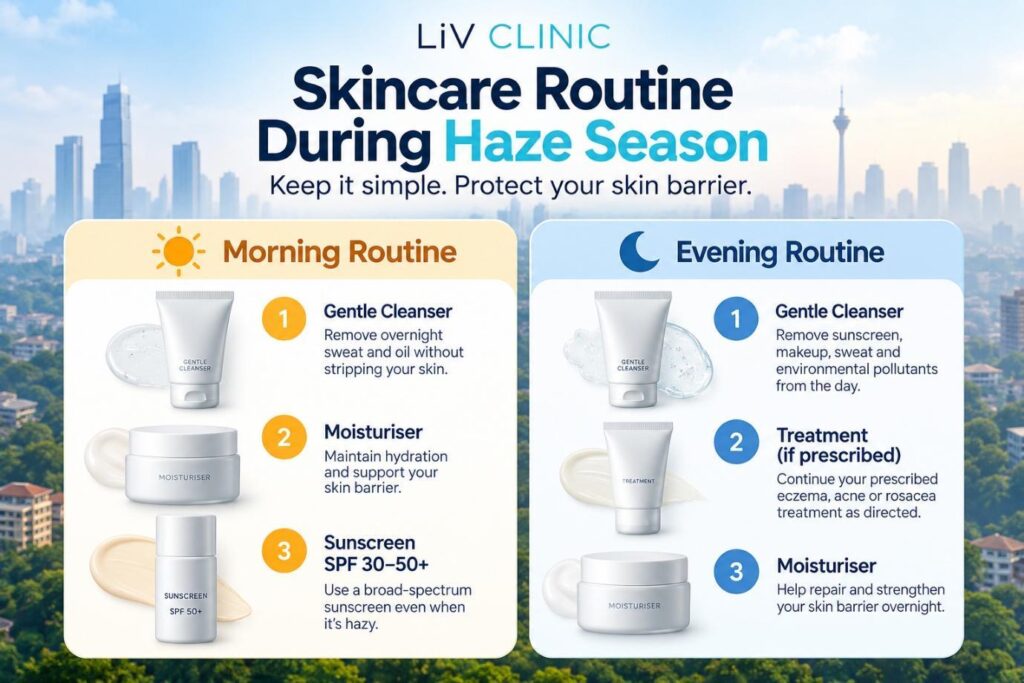
If your skin is already irritated, avoid introducing multiple new active ingredients at once.
Aggressive exfoliation, frequent chemical peels and harsh scrubbing may worsen an already compromised skin barrier.
The priority should be controlling inflammation and restoring skin comfort.
Occasional mild skin irritation may improve with gentle skincare and reduced exposure to environmental triggers.
However, persistent or worsening symptoms deserve proper assessment.
Consider seeing a skin doctor if you experience:
Seek urgent medical attention for symptoms such as breathing difficulties or significant swelling involving the face or throat.
Not every skin problem occurring during haze season is caused by air pollution. Other conditions, including contact dermatitis, infections and medication reactions, may produce similar symptoms.
A medical assessment can help determine the underlying cause.
Experiencing itchy skin, persistent redness, eczema flare-ups or worsening acne during haze season?
At LiV Clinic in Bukit Jalil, Kuala Lumpur, we understand that environmental factors can influence your skin’s health.
Our medical team provides personalised skin assessments and treatment recommendations based on your skin condition, symptoms and individual needs.
Whether you are dealing with acne, eczema, sensitive skin or skin barrier concerns, identifying the underlying problem is an important first step towards healthier skin.
Treatment may involve optimising your skincare routine, repairing skin barrier function or using appropriate prescription medication when clinically indicated.
Rather than simply adding more skincare products, our approach focuses on understanding what your skin actually needs.
Your skin is exposed to the environment every day. Give it the care and protection it deserves.
Book a Skin Consultation at LiV Clinic Bukit Jalil
Yes. Haze-related air pollution may contribute to skin irritation and inflammation, particularly in people with eczema or sensitive skin. However, persistent itching can have other causes and may require medical assessment.
Air pollution may aggravate acne through oxidative stress and inflammatory pathways. However, haze is not considered a proven direct cause of acne, which is influenced by multiple factors.
Yes. Research has found associations between air pollution exposure and increased eczema symptoms or healthcare visits. People with existing eczema may be more susceptible to irritation during periods of poor air quality.
Not necessarily. Washing your face twice daily with a gentle cleanser is usually sufficient. Additional cleansing may be appropriate after heavy sweating or significant exposure to dirt, but excessive washing can damage the skin barrier.
Yes. Haze does not completely block ultraviolet radiation. Continue using broad-spectrum sunscreen with SPF 30 or higher and other appropriate sun-protection measures.
There is no single best moisturiser for everyone. People with dry or eczema-prone skin may benefit from richer creams containing ceramides, glycerin or petrolatum. Acne-prone individuals may prefer lightweight, non-comedogenic formulations.
Long-term exposure to some air pollutants has been associated with skin pigmentation changes, but evidence that short-term haze directly causes melasma is limited. UV radiation and visible light remain important factors in melasma management.
Vitamin C is an antioxidant commonly used in skincare, but there is insufficient clinical evidence that using a vitamin C serum specifically prevents haze-related skin disease. It is optional rather than essential, and some formulations may irritate sensitive skin.
An appropriately sized air purifier with a HEPA filter can help reduce indoor airborne particles. This may lower overall pollution exposure, but direct evidence that air purifiers prevent specific skin conditions remains limited.
If you experience persistent skin irritation, eczema, redness or acne flare-ups, you can seek a skin assessment at LiV Clinic Bukit Jalil, Kuala Lumpur. Treatment recommendations depend on your diagnosis, symptoms and skin condition.
Medical information disclaimer: This article provides general educational information and does not replace individual medical consultation or diagnosis.
1346298-M
LiV Clinic is an accredited Skin and Laser Specialist Clinic by MOH located at the heart of Bukit Jalil, founded by a group of Certified Consultant Dermatologists and Aesthetic Physicians who are well-respected experts within their specialist field.