
Sweating after exercise, during hot weather or when feeling nervous is normal. It helps the body regulate its temperature.
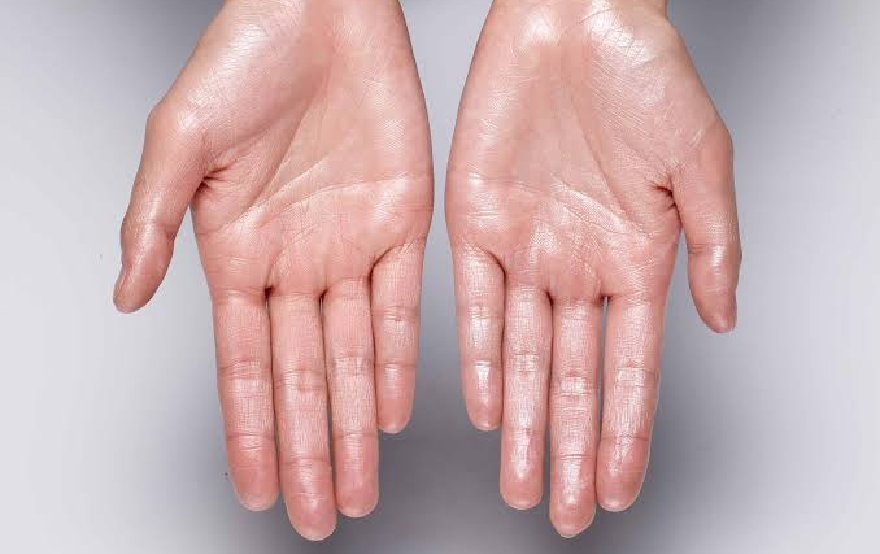
However, repeatedly sweating through your clothes while sitting in an air-conditioned room, attending a meeting or performing ordinary daily activities may be more than normal perspiration. It could be a medical condition known as hyperhidrosis.
When excessive sweating mainly affects the underarms, it is called axillary hyperhidrosis. The condition can affect clothing choices, work, relationships, confidence and overall quality of life. Some people even limit social gatherings and networking events due to this. Excessive armpit sweating can be uncomfortable, embarrassing and disruptive, but it is a recognised medical condition with several possible treatments.
Treatment options range from medical antiperspirants to prescription medication, energy-based procedures and botulinum toxin injections. At LiV Clinic, Botox® is one treatment that effectively reduces excessive underarm sweating. Our patients usually achieve high satisfaction with the results.
Hyperhidrosis is excessive sweating that occurs beyond what the body requires for normal temperature control.
Hyperhidrosis can affect different areas of the body, including:
Underarms
Palms
Soles of the feet
Face and scalp
Groin
Chest or back
Some people experience excessive sweating in one specific area, while others sweat heavily over several areas of the body.
Hyperhidrosis is not simply a cosmetic concern. Effective treatment aims to reduce sweating until it no longer interferes significantly with daily activities or social gatherings.
Axillary hyperhidrosis refers to excessive sweating originating from the underarm or armpit area.
People with this condition may develop large sweat patches shortly after getting dressed, even without exercising or being exposed to heat.
Excessive underarm sweating is not necessarily caused by poor hygiene. In many patients, the sweat glands themselves are structurally normal. The problem is related to excessive nerve stimulation of those glands.
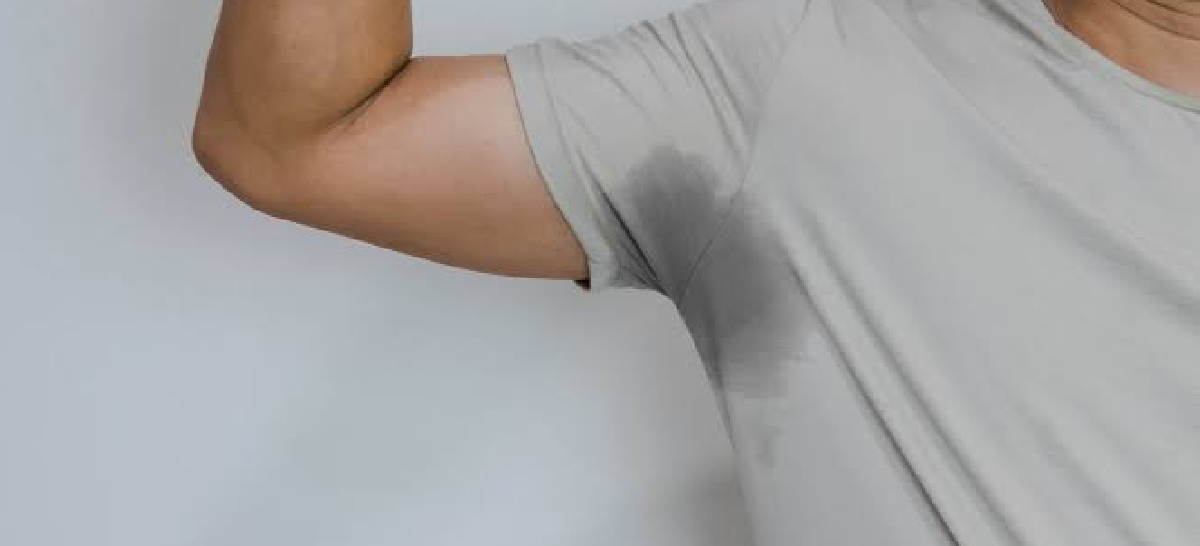
Common experiences include:
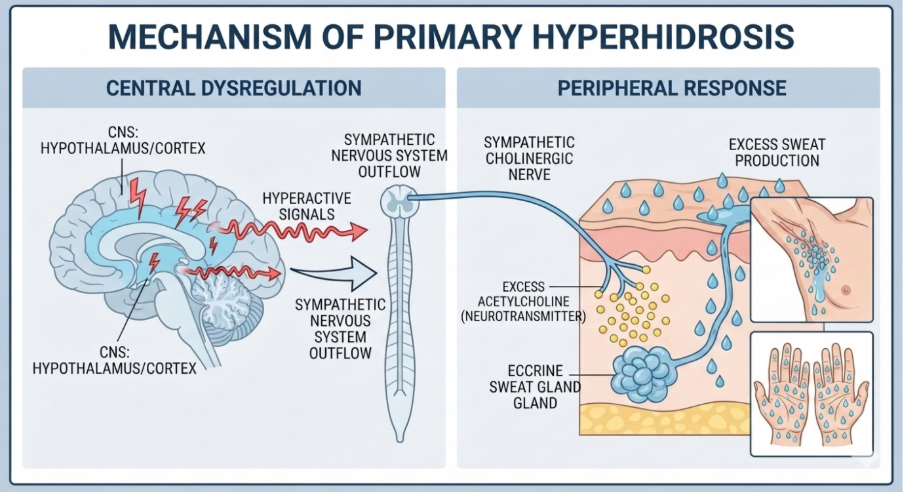
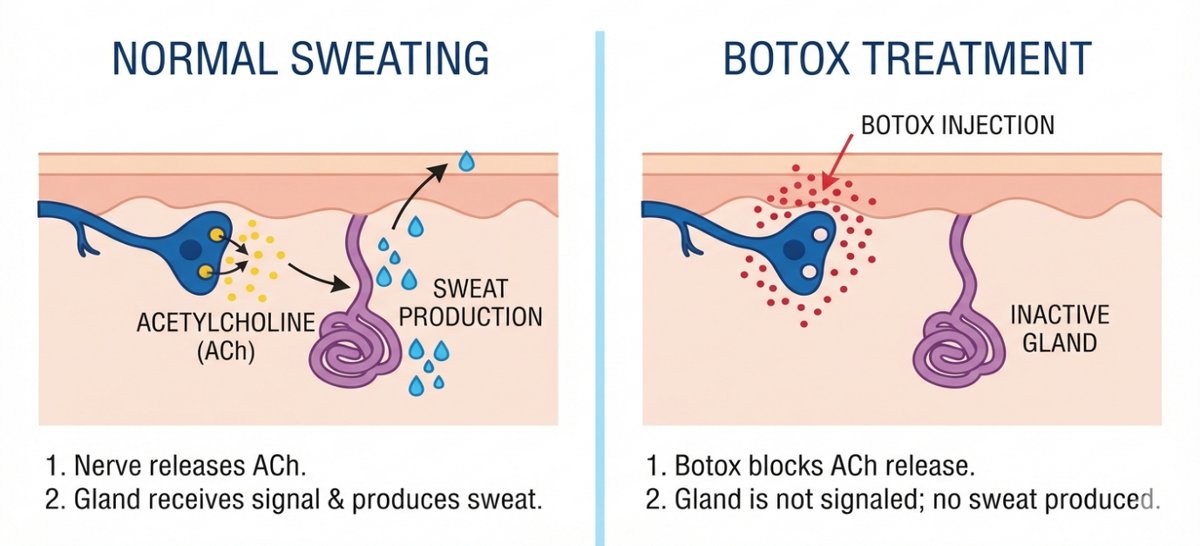
Normal sweating vs Botox treatment — the nerve releases acetylcholine, which signals the sweat gland; Botox blocks that release.
Underarm sweating is mainly controlled by the sympathetic nervous system.
Nerve endings release a chemical messenger called acetylcholine. Acetylcholine then activates the eccrine sweat glands, causing them to produce sweat.
In primary axillary hyperhidrosis, these nerve signals are overactive. As a result, the sweat glands receive repeated instructions to produce sweat even when the body does not require additional cooling.
Botulinum toxin works at this nerve-to-gland connection by temporarily reducing acetylcholine release and blocks the signal. That is why Botox is a commonly used treatment for underarm sweating because of its effectiveness and safety.
There is no single blood test that confirms primary axillary hyperhidrosis. Diagnosis is usually based on the patient’s symptoms, clinical history and examination.
A doctor may ask:
A Minor’s iodine-starch test may be performed to identify the active sweating area.
During the test:
This helps the doctor map the hyperhidrotic area and distribute treatment more accurately. The test is included in the FDA-labelled protocol for onabotulinumtoxinA treatment of primary axillary hyperhidrosis.
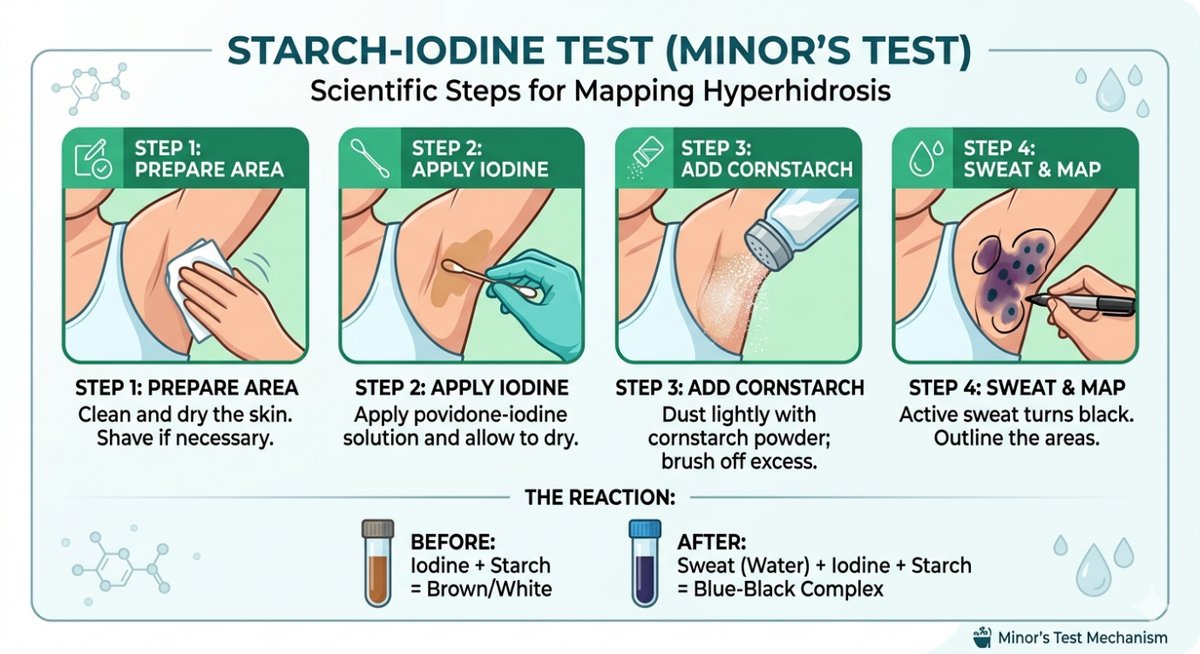
Starch-iodine test (Minor’s test) — preparing, applying iodine, dusting cornstarch, and mapping the active sweat area.
Can Botox treat excessive underarm sweating?
Yes. Botox can temporarily reduce excessive sweating when injected into the affected underarm skin.
Botox is commonly associated with wrinkle reduction, but it also has other established medical uses.
Botox is indicated for severe primary axillary hyperhidrosis in adults when topical treatments have not provided adequate control. Treatment should therefore be performed using an appropriate registered product under medical supervision.
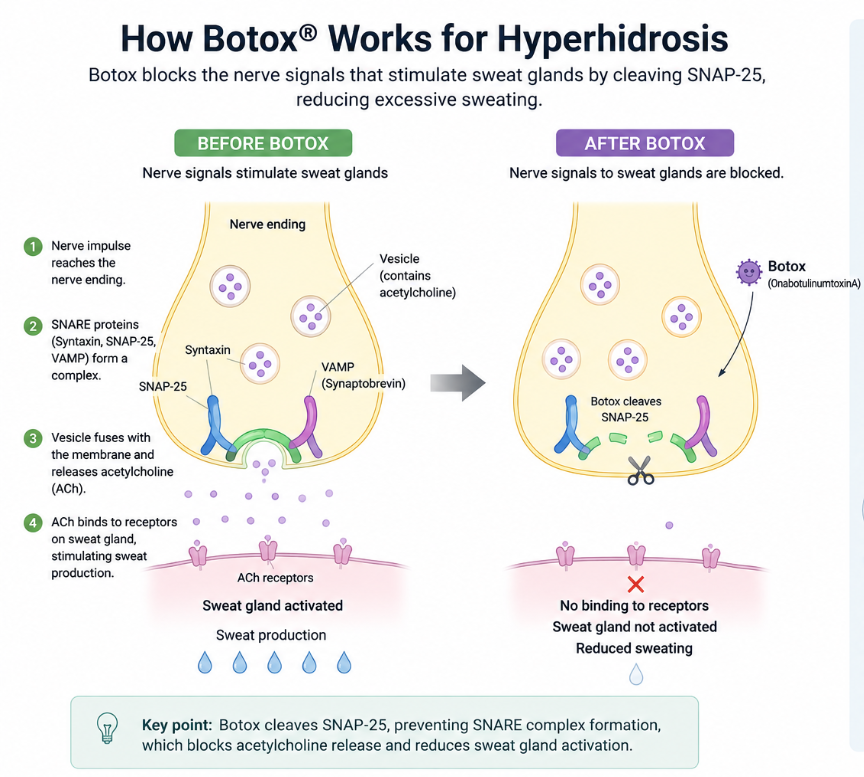
Botulinum toxin (Botox) reduces sweating through the following sequence:
1
2
3
4
5
6
7
At the molecular level, onabotulinumtoxinA (botox) cleaves SNAP-25, a protein involved in the docking and release of acetylcholine-containing vesicles.
When injected intradermally, this produces temporary chemical denervation of the sweat glands and a local reduction in sweating.
Botox does not permanently destroy the sweat glands. The effect gradually wears off as nerve signalling recovers.
1
2
3
4
Divide the area into an injection grid.
5
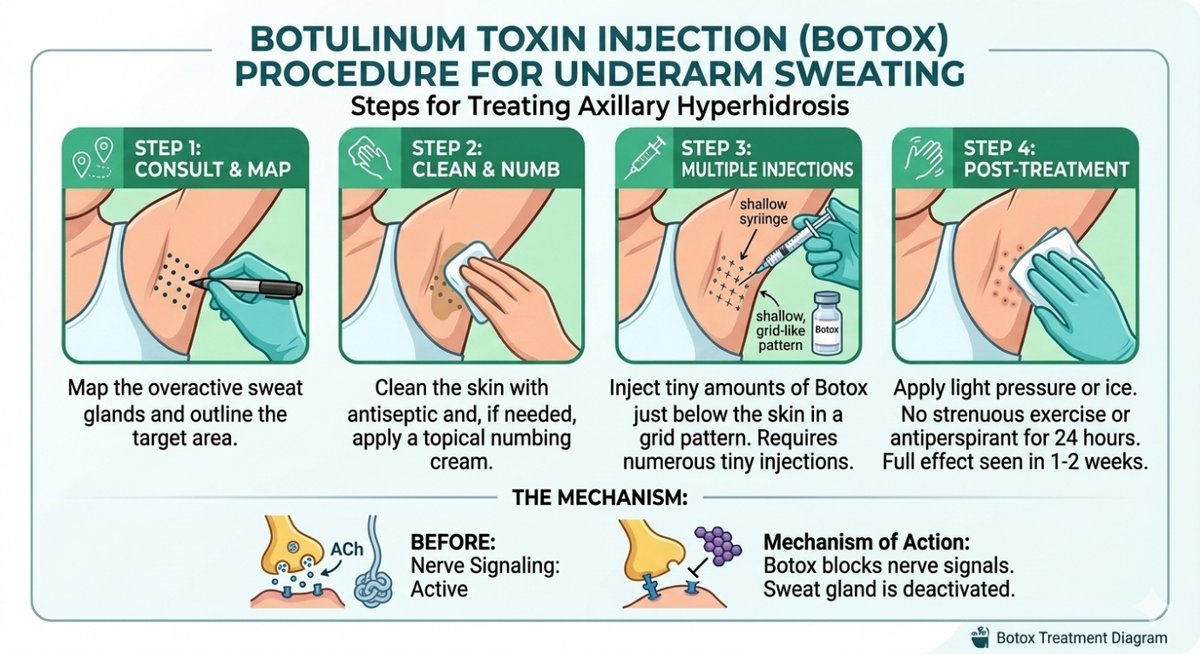
The injections are placed superficially because the aim is to target the nerve supply to the sweat glands rather than the deeper muscles.
The exact dose, dilution, spacing and number of injections depend on the product used and its approved protocol.
Clinical studies have shown that Botox can substantially reduce underarm sweat production in appropriately selected individuals.
Individual results can differ. Treatment aims to achieve meaningful control rather than guarantee that the underarms will remain completely dry in every situation.
Comparison
Treatment
Main advantage: Accessible and non-invasive
Main limitation: May irritate the skin or provide insufficient control
Treatment
Main advantage: May help several sweating areas
Main limitation: Greater potential for systemic side effects
Treatment
Main limitation: Temporary but effective
Treatment
Main advantage: May help several sweating areas
Treatment
Excessive underarm sweating is not always a problem that can be solved with stronger deodorants, darker clothing or repeated lifestyle adjustments. You do not have to keep planning your clothes, avoiding handshakes, changing shirts midday or worrying whether people can see the sweat marks.
As a conclusion, excessive underarm sweating condition is not always something you simply have to “live with” and can be easily controlled and treated by a qualified doctor at LiV Clinic.
Certified Consultant Dermatologists and Aesthetic Physicians across our clinics assess and oversee every treatment plan.



Visit us at either of our clinic locations for your consultation and treatment.
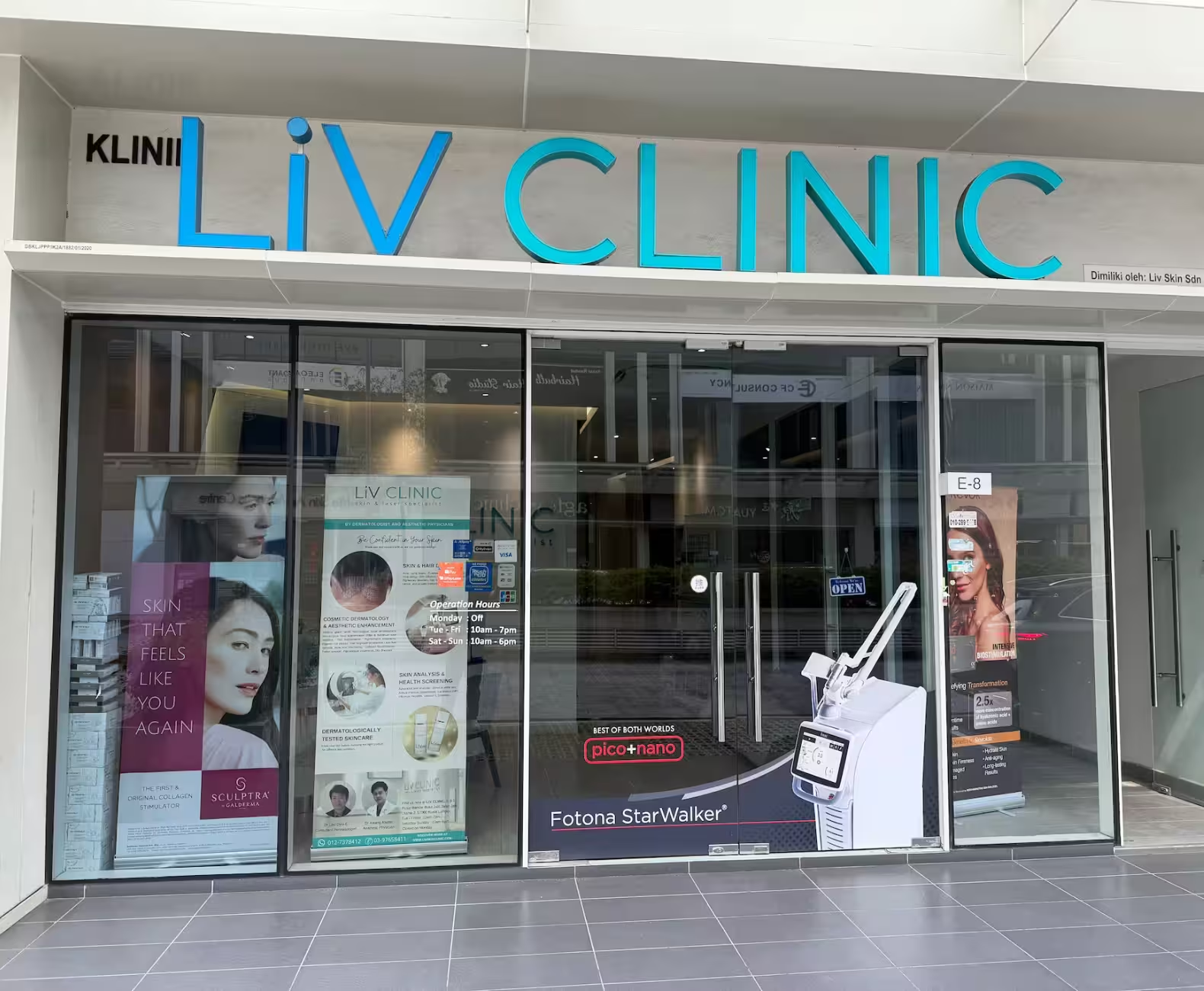
E-8-1, Pusat Bandar Bukit Jalil, Jalan Utama 2, Bukit Jalil, 57000 Kuala Lumpur, Malaysia.
Opening Hours
Wednesday – Friday: 10am – 7pm
Tuesday, Saturday, Sunday: 10am – 6pm
Closed every Monday
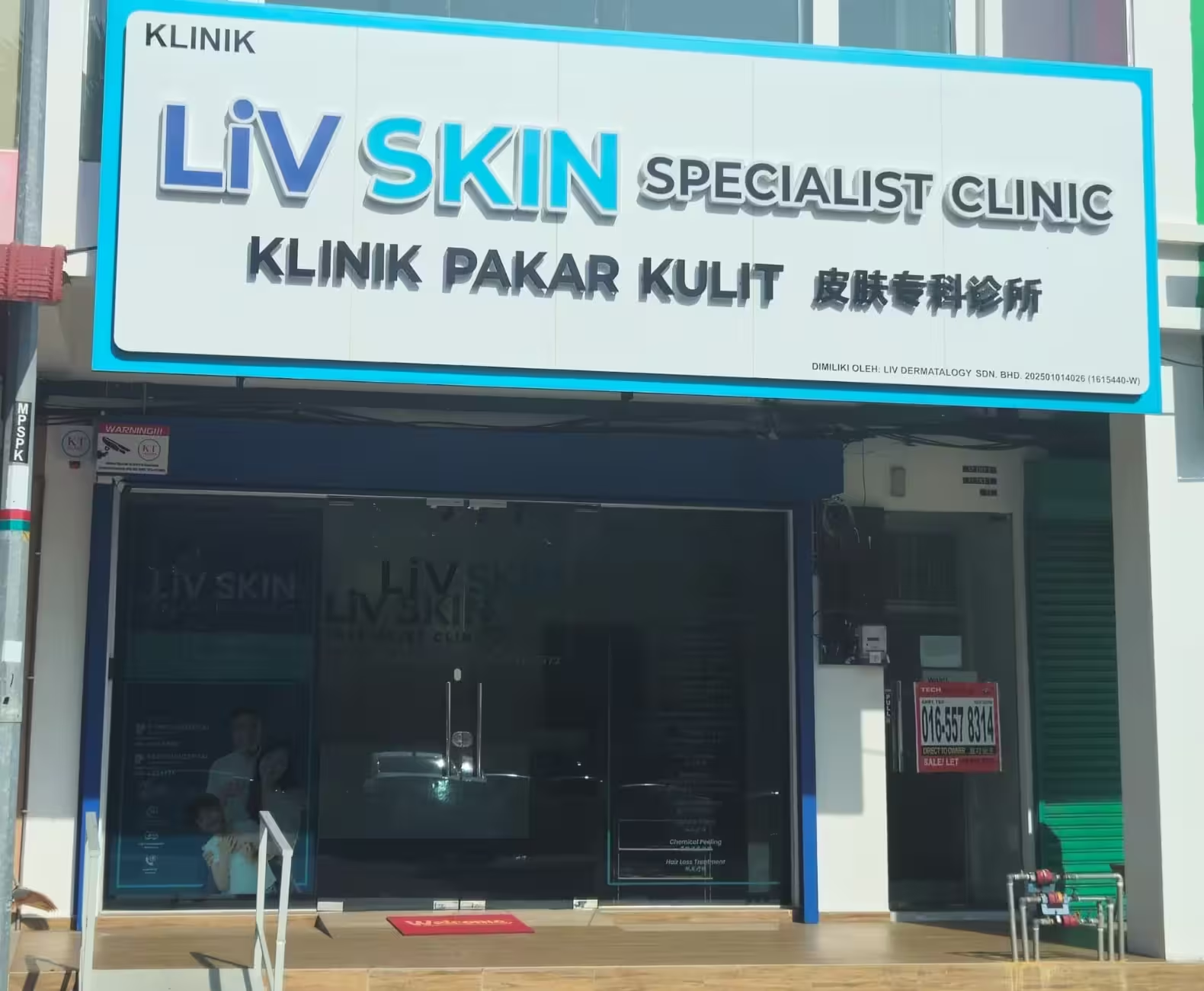
No. 17, Ground Floor, Jalan Perdana Heights 1/2, Perdana Heights, 08000 Sungai Petani, Kedah, Malaysia.
Opening Hours
Monday-Sunday: 930am-5pm
Closed every Thursday
Most patients experience a series of brief pinprick sensations and is generally tolerable.
Botulinum toxin does not usually stop sweating immediately. Many patients notice a reduction within approximately 7 to 10 days. The response may continue to become clearer over the following days.
Results are temporary but effective.
The American Academy of Dermatology reports that botulinum toxin results for the underarms or hands commonly last approximately 4 to 10 months. Duration varies according to the individual, severity of sweating, treatment area and response to the product.
Sweating usually returns gradually rather than suddenly. Repeat treatment may be considered when the clinical effect has diminished.
Common short-term effects may include:
No. Excessive sweating and body odour are related but different problems.
Hyperhidrosis refers to excessive sweat production.
Body odour, sometimes called bromhidrosis, refers to an unpleasant smell arising from the underarm area.
A patient may have:
The medication may be from the same botulinum toxin family, but the purpose and injection technique are different.
Botulinum toxin for wrinkles is generally injected into selected facial muscles to reduce muscle contraction.
For axillary hyperhidrosis, the injections are distributed intradermally and superficially across the sweating area to reduce stimulation of the sweat glands.
No.
Botulinum toxin temporarily and effectively reduces the nerve signals responsible for activating the treated sweat glands. It does not permanently remove the glands or cure the underlying tendency toward hyperhidrosis.
As nerve activity recovers, sweat production gradually returns.
Botulinum toxin is also used clinically for focal sweating involving areas such as the palms, soles and face.
However, these areas require different techniques and carry different considerations. Palmar treatment, for example, may be more painful and can temporarily affect hand muscle strength. Consult your Doctor to know more on this.
Not every dark spot should be treated the same way. Melasma, sunspots, freckles, and post-inflammatory hyperpigmentation each require different strategies, and the wrong treatment can sometimes make pigmentation worse.
At LiV Skin Specialist Clinic, our consultant Dermatologist provides a thorough assessment—including clinical examination, Wood’s lamp evaluation, and dermoscopy when appropriate—to identify the exact type of pigmentation before recommending a personalised treatment plan. Whether your treatment involves prescription skincare, medical-grade chemical peels, Pico laser, microneedling, or a combination approach, our focus is on achieving safe, natural-looking, and long-lasting results while protecting your skin.
1346298-M
LiV Clinic is an accredited Skin and Laser Specialist Clinic by MOH located at the heart of Bukit Jalil, founded by a group of Certified Consultant Dermatologists and Aesthetic Physicians who are well-respected experts within their specialist field.